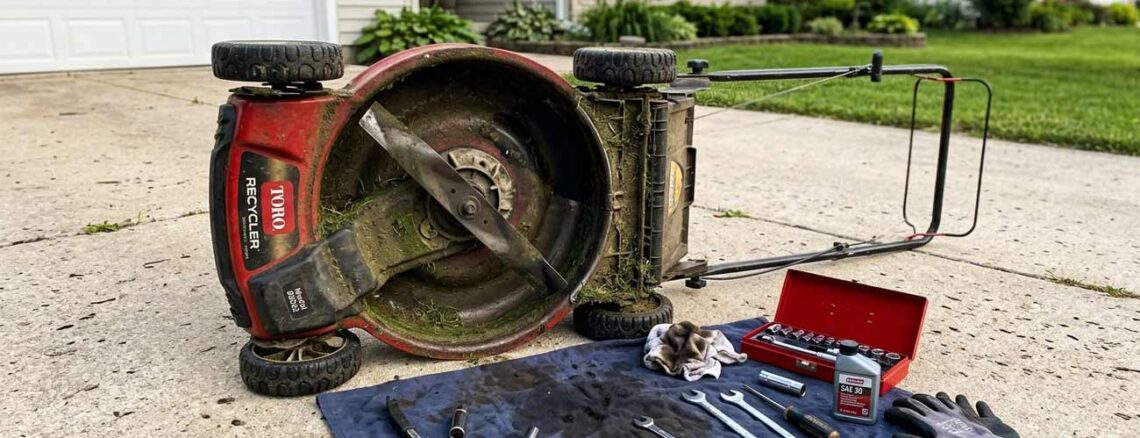
Fixing Common Lawn Mower Problems Yourself: 7 Easy Fixes
Fixing common lawn mower problems yourself saves a repair shop trip and often takes less time than dropping it off would, since most issues come down to a small handful of usual suspects.
Basic Safety First
Before touching anything, always disconnect the spark plug wire first to prevent accidental starting while you work. Always work on a flat, stable surface, and let the engine cool completely if it’s been recently running.
Fixing Common Lawn Mower Problems: 7 Issues to Check
- Mower won’t start — check for stale gas (drain and refill if it’s been sitting over a month), a fouled spark plug (clean or replace it), or a disconnected spark plug wire.
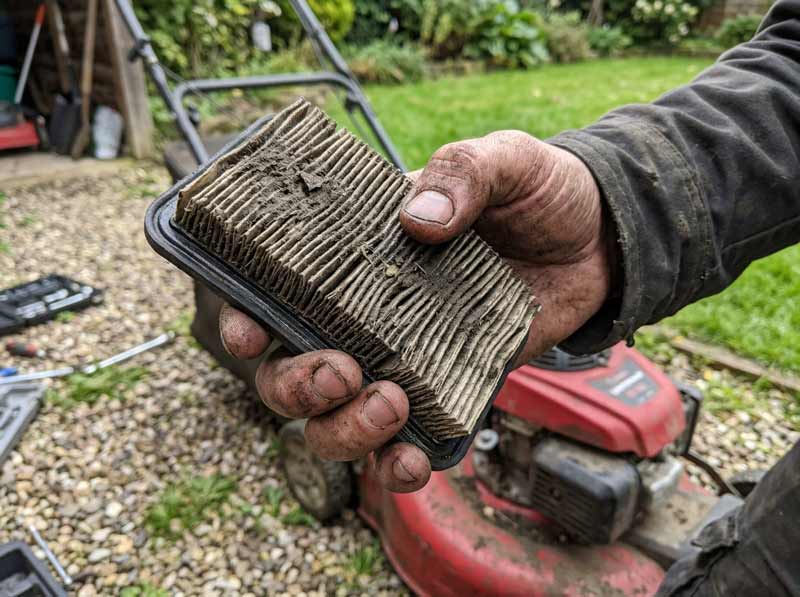
- Engine starts but stalls — often a clogged air filter or dirty carburetor restricting airflow; clean or replace the air filter as a first step.
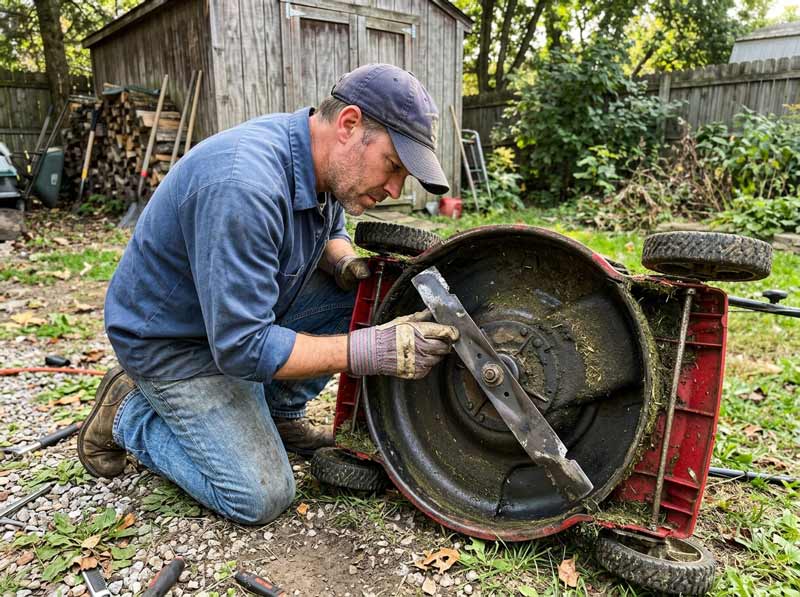
- Uneven cutting — usually means a dull or bent blade, or mower deck sitting unevenly; check blade sharpness and deck height on all sides.
- Excessive vibration — commonly caused by a bent or unbalanced blade, or loose bolts on the deck or engine mounts, so check all fasteners.
- Losing power under load — often points to a dirty air filter, old fuel, or a carburetor needing cleaning after sitting idle over winter.
- Pull cord is hard to pull or stuck — can indicate a seized engine, damaged recoil starter, or debris jammed in the blade housing.
- Leaking oil or gas — check gaskets, the oil fill cap, and fuel lines for cracks or loose fittings, especially on older mowers.
Tools You’ll Need
Fixing common lawn mower problems yourself usually requires nothing more than a basic toolkit: a socket wrench set, a spark plug wrench or socket, pliers, a flathead and Phillips screwdriver, and a wire brush for cleaning corroded parts. A small funnel makes fuel and oil changes far less messy, and a blade balancer (or a simple nail-and-string setup) helps confirm whether a blade is truly balanced after sharpening. None of these tools are expensive, and most homeowners can assemble a basic mower repair kit for under $50 total.
Basic Maintenance That Prevents Most Problems
Change the oil once a season, replace the air filter annually, and sharpen or replace the blade at least once a year for a cleaner cut. Draining old fuel or adding a fuel stabilizer before winter storage prevents the gummy residue that causes most spring starting problems. University extension small-engine maintenance guides sometimes cover basic mower upkeep alongside their broader lawn care content, which is worth checking for region-specific tips.
When to Call a Repair Shop Instead
If you’re hearing knocking or grinding sounds from the engine, or the mower has significant oil visibly mixed into the gas tank (a sign of internal engine damage), it’s usually time for a professional. Electrical issues on mowers with a battery-start system can also be trickier to diagnose without the right diagnostic tools, so a shop visit may genuinely save time compared to guessing.
Final Thoughts
Fixing common lawn mower problems yourself is realistic for most homeowners once you know where to look first — fuel, filters, and blades solve the vast majority of issues without ever needing a shop visit. A quick seasonal maintenance routine also prevents most of these problems from showing up in the first place, saving both time and money over the life of the machine.
Have a specific mower issue you’re stuck on? Contact us — we’re happy to help point you in the right direction.

You May Also Like